
5 TEACHING IDEAS FOR COME FOLLOW ME LESSONS
See the complete list of CFM Lessons
Pearl of Great Price: Moses 1, Abraham 3
This week’s lesson plan includes: the majesty of God, Satan’s pride, the writings of Moses and Abraham, and how to keep our second estate.
Tips for delivering a successful lesson are located at the end of the article.
Note: All blue quotes are from the Pearl of Great Price (unless otherwise noted).
Quote #1 (God)
Possible engagement tool: God is an essential topic – and Moses shares how majestic He is. Let’s spend some time on it. Please listen to the following verses and see what stands out for you.
Note: Please divide between two or more readers.
3 And God spake unto Moses, saying: Behold, I am the Lord God Almighty, and Endless is my name; for I am without beginning of days or end of years; and is not this endless?
4 And, behold, thou art my son; wherefore look, and I will show thee the workmanship of mine hands; but not all, for my works are without end, and also my words, for they never cease. (Moses 1:3-4)
—AND—
1 Listen to the voice of the Lord your God, even Alpha and Omega, the beginning and the end, whose course is one eternal round, the same today as yesterday, and forever. (Doctrine and Covenants 35:1)
Possible discussion questions: How long has God been around? If you were to describe who God is to a friend, what would you say? Why is God important to you? Do you have a favorite hymn about God? (Allow them time to look at the hymn directory. Mine is How Great Thou Art.) What line do you especially enjoy from that hymn? (Allow them time to look up the hymn and cite the line.)
Quote #2 (satan)
Possible engagement tool: The scriptures share that Satan has a great desire to be worshipped, bowed to, and admired.
Note: Please divide among three or more readers.
12 And it came to pass that when Moses had said these words, behold, Satan came tempting him, saying: Moses, son of man, worship me.
13 And it came to pass that Moses looked upon Satan and said: Who art thou? For behold, I am a son of God, in the similitude of his Only Begotten; and where is thy glory, that I should worship thee?
—AND—
8 Again, the devil taketh him up into an exceeding high mountain, and sheweth him all the kingdoms of the world, and the glory of them;
9 And saith unto him, All these things will I give thee, if thou wilt fall down and worship me.
—AND—
Pride is a deadly cancer. It is a gateway sin that leads to a host of other human weaknesses. In fact, it could be said that every other sin is, in essence, a manifestation of pride.
This sin has many faces. It leads some to revel in their own perceived self-worth, accomplishments, talents, wealth, or position. They count these blessings as evidence of being “chosen,” “superior,” or “more righteous” than others. This is the sin of “Thank God I am more special than you.” At its core is the desire to be admired or envied. It is the sin of self-glorification. (Elder Uchtdorf, Pride and the Priesthood – Oct 2010)
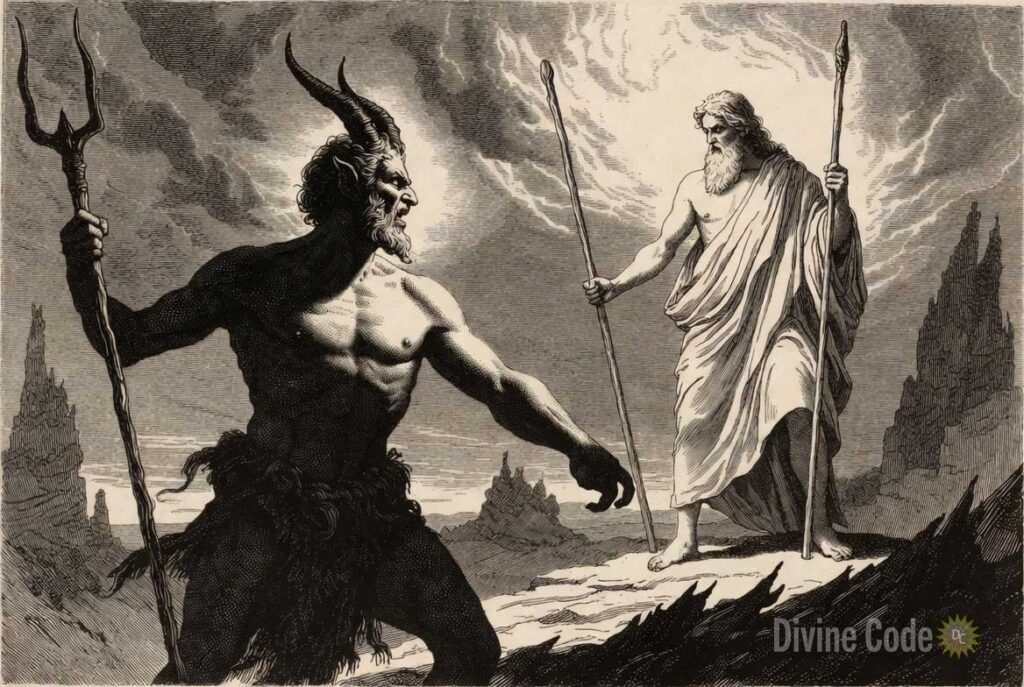
Possible discussion questions: What did Satan greatly desire from Moses and Jesus Christ? Does Satan have pride? How do you know that? What are some of the forms of pride Elder Uchtdorf warns against? What does pride do to our hearts and our spirits? (Accept all reasonable answers – it reduces them.) Who should we worship?
Quote #3 (prophecy)
Possible Intro: The Bible does not have Moses’s sacred and powerful accounts, and God foretold Moses that his writings would be lost for a while.
40 And now, Moses, my son, I will speak unto thee concerning this earth upon which thou standest; and thou shalt write the things which I shall speak.
41 And in a day when the children of men shall esteem my words as naught and take many of them from the book which thou shalt write, behold, I will raise up another like unto thee; and they shall be had again among the children of men—among as many as shall believe.
Possible discussion questions: What kind of a prophet was Moses? How many of Moses’s more majestic visions of God’s creations made it into the Bible? Why are we able to read them today? (Because of the prophet Joseph Smith and the Pearl of Great Price.)
Quote #4 (abraham)
Possible engagement tool: The Bible does not have Abraham’s sacred and powerful accounts either.
11 Thus I, Abraham, talked with the Lord, face to face, as one man talketh with another; and he told me of the works which his hands had made;
12 And he said unto me: My son, my son (and his hand was stretched out), behold I will show you all these. And he put his hand upon mine eyes, and I saw those things which his hands had made, which were many; and they multiplied before mine eyes, and I could not see the end thereof.
Possible discussion question: What kind of a prophet was Abraham? How many of Abraham’s majestic visions of God’s creations made it into the Bible? (none of them) How valuable is the Pearl of Great Price to us as a volume of scripture?
Quote #5 (whatsoever)
Possible engagement tool: Write the word “whatsoever” on the board and invite your class to think about what that word means as we listen to the following two verses:
25 And we will prove them herewith, to see if they will do all things whatsoever the Lord their God shall command them;
26 And they who keep their first estate shall be added upon; and they who keep not their first estate shall not have glory in the same kingdom with those who keep their first estate; and they who keep their second estate shall have glory added upon their heads for ever and ever. (Abraham 3;25-26)
—AND—
“If we do the part that He has assigned unto us, and keep our second estate, we shall be sure to realize these promises in every particular, and more than you and I can possibly comprehend.” (Lorenzo Snow, Teachings of Lorenzo Snow, ch. 5)
Possible discussion questions: What does “whatsoever” mean? Is any commandment or gospel teaching too small to observe or consider important? How valuable is obedience to our spiritual strength and power? Who can explain what the first and second estates are? (Pre-mortal life and earth life) What happens to those who keep their second estate?
Summary
Summarize class discussion highlights and/or share your testimony and feelings about the lesson. Thank your class for their excellent contributions and insights.
Final Comment
As you study and teach, you can help others find more truths in the scriptures. Thank you for sharing powerful Pearl of Great Price teachings with others.
If you would like some tips on how to feel more confident while teaching, try “9 Tips for More Class Participation.” Please arrange the quotes in any order that makes sense to you.
(You can find the Church’s Come, Follow Me lesson here.)
How to Teach Successfully and Give a Better Lesson
You have great content; now let’s ensure the lesson goes smoothly.
Unless you opt to spend a lot of time on a particular quote, try to pick around 2 questions per quote. Choose the questions that resonate the most with you and would make a meaningful discussion for your group of personalities.
Lesson Prep
- If you want the discussion to be more robust and meaningful, hand out reading assignments ahead of time and ask the reader to answer one question about them (i.e. pick one of the questions from each quote and give it to them, along with the assigned quote). The sooner you do this, the better, but if possible, at least show it to them before the Sacrament meeting. You can also send it via text or email.
- Ask various people to read and participate, especially those who are not often asked to do so.
- Don’t ever worry about covering all the quotes and verses…rushed lessons are less effective.
Lesson Delivery
You can arrange the quotes in any order that makes sense to you. I suggest starting with the most important ones and working your way down. Don’t worry about covering all the quotes during class. If you want more discussion and engagement, here are some tips:
- Ensure every class member has a set of scriptures in front of them or on their phone. Always invite the class to read along—hearing and seeing the words together increases comprehension and engagement.
- Avoid videos – they shut down discussion. Save them for personal study.
- If the discussion becomes too non-spiritual, pull it back by moving on to the next quote or question.
- Make sure you assign others to read the quotes. You’re talking enough already, and letting others read allows more people to participate.
- Encourage discussion by accepting all reasonable answers. Validate people for participating, and be thankful they spoke up. Engage with the answer in a conversational way whenever it feels natural. Never say, “That’s not the right answer,” or “We haven’t got to that part of the lesson yet.”
- Remember, spiritual discussion is golden. We want people to talk about the gospel together.
- If the discussion takes a different turn than you had planned, roll with it. The Spirit intends for you to be successful.
0 Comments